This article is going to be unusually long, but I promise you, it's worth the read.
"The people on the infrastructure side" are undoubtedly the biggest winners so far. But when we look beyond the realm of computational power and GPUs, who else is reaping the benefits?
I've seen plenty of arguments: Is it the developers, now equipped to write better code faster? Or the sales teams, leveraging automated insights and outreach? Or perhaps, like in my own experience, it's Product Managers who are seeing the biggest impact?
Well, let's explore this together.
If you are a lazy reader (no offence), you can scroll quickly to the concluding paragraph where you will find my conclusion and my big announcement. But if you can take your time to read through, I promise to walk you through the following:
- What happens when AI meets Product Management
- How to build AI Products
- How to build products using AI with an example
- How this changes everything for building portfolios for product managers
- How this changes everything for shipping MVPs swiftly
- What we are to expect in the future
So, what will it be? Stick with me or read the conclusions.
When two colossal forces converge, their collision creates a brilliant flash, a radiant dance of energy and light. In that moment, new worlds are born, forged from the chaotic embrace. From the chaos emerges order, a testament to the power of creation (I'm just channelling my inner Shakespeare here. Stay with me).
What are the colossal forces? AI and Product Management.
What are the new worlds? AI Product Management and AI for Product Management.
AI Product Management: This simply refers to the art of building AI or AI-powered products. So, like a product manager for ChatGPT or Claude, or the dreadful Veo3.
- Getting document templates to onboard your teammates on your ideas
- Defining project scope
While people are very hyped about this AI wave, you'd be shocked that most of us are relatively new to building in the space and as such, it will be difficult to access templates like you can easily find your GTM Strategy document template or PRD template. How did I approach mine? I used the current templates we have and then combined my knowledge of AI product development process and empathy to build the relevant documents.
Put simply, to create an AI Product PRD for instance, I picked a regular PRD. But because I know how AI projects/products are built, I knew what the ML Engineer would like to see to have a detailed understanding of what was in my head. Then, I proceeded to add them to the PRD. These include expected data types, data structures and model teardowns, and many more things.
That said, how did I approach project scope? Honestly, it's just communication, especially with the internal stakeholders, understanding the expectations and managing it.

Now, to the interesting part of this article (this actually inspired me to work on this). You guessed right, AI for product management refers to everything that goes into product managers employing AI in building their products. It could also refer to product managers using AI to optimise their processes. This includes using LLMs like ChatGPT to generate document templates, review them, brainstorm ideas or using AI to generate presentations. Or Product Management newbies using AI to generate case study questions or prepare for interviews. At this point, I think AI in this regard has been closely knitted into our process (if you have not started using AI in this regard yet, you should start, though please confirm your company policy for using AI and do not share sensitive information with AI).
Do you know what I have found interesting in the past few days? Vibe coding and its endless possibilities for Product Managers. If you don't already know, vibe coding is prompt-based coding. It refers to this joyful dance between your ideas and the AI's responses. You're not sweating over every line of code, instead, you're letting the vibes guide the prompts, tweaking them, and seeing what emerges. It's less about perfection and more about the playful, lovable magic of turning ideas into code, like coding to the rhythm of your thoughts.
I've been seeing tweets about it since 2024 but I have not been paying attention to it, but after a conversation with one of my friends recently, I started digging and I am not exaggerating when I say that I am blown away.
What can you do with this new super-power as a product manager?
- You can easily and quickly build and ship MVPs with little or no interference from developers. Like I will show you in coming paragraphs, I built a product from just prompt without the help of any developer.
- A problem that has been plaguing product newbies is that they need people from other career tracks like designers and devs to build portfolio projects that truly stand out. Don't get me wrong, from time immemorial, we PMs have built our portfolios by documenting case studies etc, but imagine being able to build out testable products from just prompts and adding that to your portfolio. Imagine how it will set you apart!
That said, why do I think we are the biggest winners again? We are prompters! Look at all the cross-functional collaboration that you do, in the true sense of it, what are you doing? You are prompting! We prompt devs, we prompt designers, we prompt everyone basically. This is my conclusion. Imagine the shock on the face of those that skipped to the end of this article to see my conclusion, well, I can be that funny. Now, let us continue?

It is not enough for me to tell you about vibe coding and how it can be of great use for product managers, I have actually built out a product MVP just by vibe coding, fully functional as well. I will be walking you through a step by step guide to building your first MVP by vibe coding.
To successfully build a brilliant MVP like I have, you need the following:
- A ChatGPT account. This is what we will use to generate and refine our prompts. We will also use it to inspect code to be sure that it's safe and fulfils purpose.
- A Lovable.dev account. This is where all the prompting will happen. It is an AI-powered app development platform that enables users of any skill level to create full-stack web applications without requiring coding expertise, simply by describing what they want in plain English. It also allows for a seamless integration with Supabase which will handle the backend.
- A Supabase account.
- A knowledge of the components of a user-facing digital product. Every user-facing app has 3 components: the frontend (that you see when you use their URL), the backend which is like the engine that you are not seeing (how are you able to use the same username and password to login to an app every time and your data is stored? It is because there is a backend where your data is stored and then it is called each time you authenticate), and the third component, business logic, i.e. what happens when you click what.
Are there other tools we can use for each of the highlighted purposes? Yes. I am only choosing this for the purpose of this article.
- Draft a one pager. This will be a detailed description of what you want to build. Not a PRD, but a document that when shared with someone that has absolutely no idea of what you are building, they will understand.
- Go to ChatGPT and write this prompt: "You are an expert vibe coder with lovable, I have a product brief for a product. If I share, will you give me the prompt you will use on lovable.dev?"
- Paste your product brief.
- Copy the response to paste on lovable.dev.
- When you want to implement any feature or you get a response you don't understand, copy and paste on ChatGPT and ask for a prompt to solve your problem.
- Publish your MVP and share the link.
What are we to expect in the future?
At this rate it is looking like AI will take our jobs. I am convinced that anyone who can adopt AI into their process to optimise and move swiftly will stay ahead of their competitors. I am convinced that if AI will even take anyone's job, great product managers will be the last to lose their jobs because AI will need prompts to yield results, and the better the prompts, the better the result you will get.
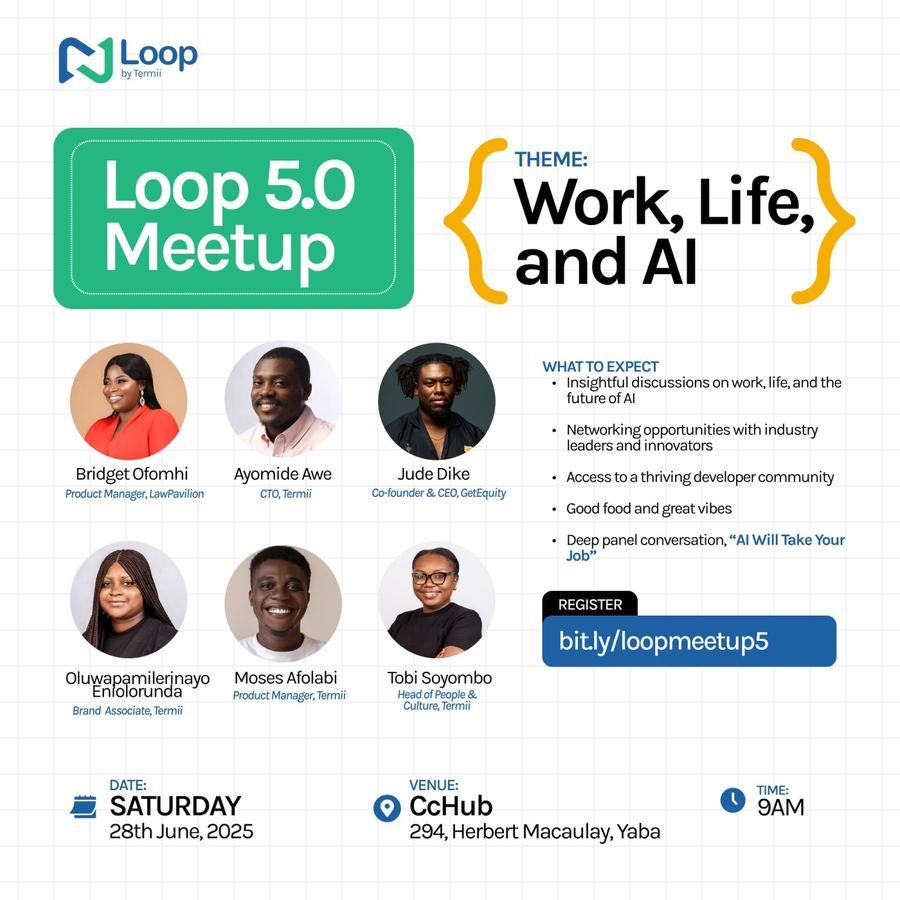
My conclusion that I mentioned in the body of the article still remains. And now to the big news: if you are a business owner or product owner and you are open to using AI to build your MVP to quickly test your product ideas, I am a DM away! Of course, it comes at a cost. Imagine a Product Manager bringing your idea to life swiftly! What do you get?
- MVP Definition
- User-centric implementation
- Support
- Your MVP in the hands of users in less than 1 week!